The Ultimate Guide to the Keto Diet: What It Is, How It Works, and Getting Started

Are you looking for an effective way to lose weight, boost your energy levels, and improve your overall health? If so, you’ve likely heard of the Ketogenic (Keto) diet.
The Keto diet has taken the health and wellness world by storm, and for good reason. Unlike many fad diets, the ketogenic lifestyle is backed by science and focuses on shifting the way your body burns fuel.
Here is everything you need to know about the Keto diet to help you decide if it’s the right choice for you.
What is the Keto Diet?
The Keto diet is a very low-carbohydrate, high-fat, and moderate-protein diet. The primary goal is to drastically reduce your carbohydrate intake and replace it with healthy fats.
By cutting out carbs, you put your body into a metabolic state called ketosis.
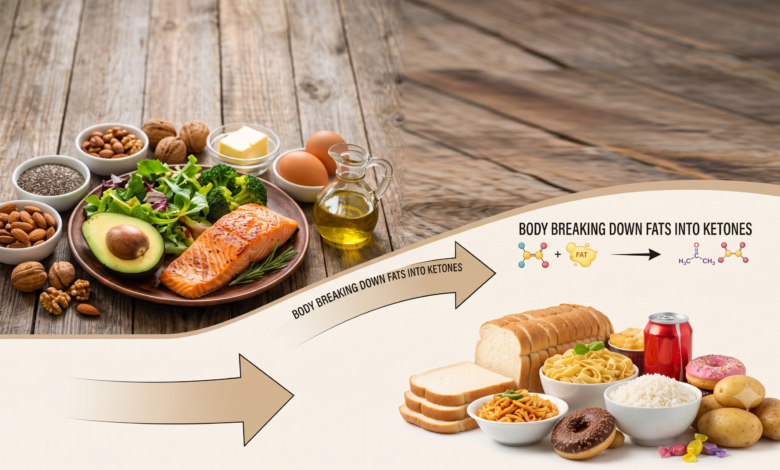
What is Ketosis? Normally, your body burns carbohydrates (glucose) for energy. When you limit carbs, your body runs out of its primary fuel source. It then turns to your liver to break down stored fats into molecules called ketones, which become your body and brain’s new, highly efficient energy source.
The Golden Ratio: What Do You Eat?
To successfully reach ketosis, your daily calorie intake should roughly follow these percentages:
-
70% to 75% Fats: Healthy oils, butter, avocados, and fatty meats.
-
20% Protein: Poultry, beef, fish, and eggs.
-
5% to 10% Carbohydrates: Leafy greens and non-starchy vegetables (usually under 20–50 grams of net carbs per day).
Foods to Enjoy:
-
Meat & Fish: Beef, chicken, salmon, and tuna.
-
Healthy Oils: Extra virgin olive oil, coconut oil, and avocado oil.
-
Dairy: Butter, heavy cream, and unprocessed cheeses.
-
Nuts & Seeds: Almonds, walnuts, chia seeds, and flaxseeds.
-
Low-Carb Veggies: Spinach, broccoli, cauliflower, and zucchini.
Foods to Avoid:
-
Sugary Foods: Soda, fruit juice, cakes, and candy.
-
Grains & Starches: Bread, rice, pasta, and cereal.
-
High-Carb Fruits: Bananas, apples, and grapes (berries are okay in small amounts).
-
Root Vegetables: Potatoes, sweet potatoes, and carrots.
Key Health Benefits of Going Keto
People love the Keto diet because it offers more than just weight loss. Here are some of the top benefits:
-
Rapid Weight Loss: By burning fat for fuel and lowering insulin levels, your body naturally sheds excess fat.
-
Appetite Suppression: High-fat and moderate-protein foods keep you feeling full and satisfied for longer, reducing cravings.
-
Increased Mental Clarity: Many people report experiencing better focus, concentration, and sustained brain energy when their brain uses ketones.
-
Steady Energy: Without the constant spikes and crashes caused by sugar and carbs, your energy levels remain stable throughout the day.
Tips for Beginners: How to Avoid the “Keto Flu”
When you first start, your body undergoes a major transition. This can sometimes cause temporary side effects known as the “Keto Flu,” which includes symptoms like headaches, fatigue, and irritability.
To minimize these effects, keep these tips in mind:
-
Stay Hydrated: Drink plenty of water throughout the day.
-
Replenish Electrolytes: The Keto diet causes your body to flush out water and essential minerals. Make sure to get enough sodium, potassium, and magnesium.
-
Don’t Rush It: Allow your body a couple of weeks to adapt to burning fat.
Final Thoughts
The Keto diet is a powerful lifestyle shift that can completely transform your health and body composition. However, consistency is key. Before starting any drastic dietary change, it is always a good idea to consult with a healthcare professional or a registered dietitian to ensure it aligns with your personal health needs.
Are you ready to start your Keto journey? Let us know your thoughts or favorite Keto recipes in the comments below!
